
 Harrison Pates
The Moscow Oblast School Stabbing: Digital Rehearsal, Gaming Communities, and Youth Pathways to Violence
In the morning on 16 December 2025, local police were called to a school in…
 Imtiaz Baloch
From Defence to Offence: How Anti-Drone Technologies Are Empowering Militants in a New Era of Coordinated Drone Warfare
In 2025, Pakistani security forces witnessed at least 405 quadcopter attacks by Islamists Tehreek-e-Taliban (TTP)…
 Sergey Elkind
3D-Printed Warfare: A New Phase in Jihadist “Do-It-Yourself” Innovation Targeting the West?
This Insight analyses potential security threats associated with the use of 3D-printing technologies for the…
 Nodirbek Soliev
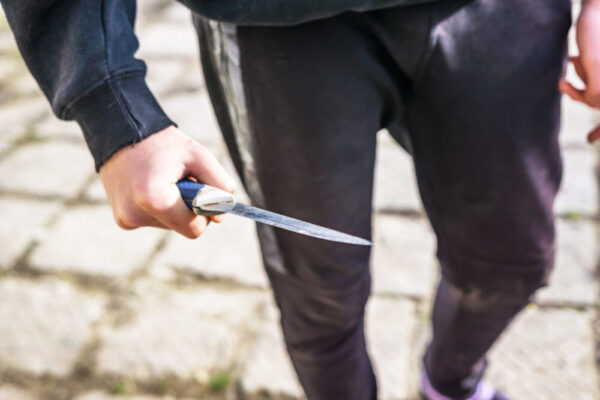
The Moscow Oblast School Stabbing: Understanding Hybrid Radicalisation and Transnational Online Subcultures
The fatal stabbing of a 10-year-old Tajik immigrant schoolboy in the Odintsovo district of Moscow…
 Nina Kurt
Testing Resilience: Can the Proposed EU Drone Wall Defend Against Extremist Actors?
The European Union is developing a “Drone Wall”, officially named the European Drone Defence Initiative,…
 Sonja Belkin
Understanding Cyberhacktivist Radicalisation: A Socio-Psychological Approach
Note: The following Insight draws on research conducted by Sonja Belkin and Kristy Sakano under…


X

Today, @ImtiazBaluch and Esham Farooq aim to examine coordinated #drone attacks in #Pakistan with a specific focus on the anti-drone capabilities of militant groups, assessing their strategic intent and technological evolution.

In this @GNET_research Insight, I explain Moscow Oblast school knife attacker’s hybrid radicalisation pathway, where elements of a structured far-right doctrinal framework intersect with selectively adopted fragments such as symbols, slogans, rituals, & scripts of similar attacks
Adding to the dialogue on 3D-printing technologies and jihadist actors, Sergey Elkind analyses the potential security threats linked to the production of firearms and UAV components, highlighting risks for Western countries.
Nodirbek Soliev analyses the #MoscowOblast School Stabbing by examining how the personal grievances of the attacker and his exposure to ideological bricolage drawn from Western far-right milieus contributed to this case of deadly performative violence.